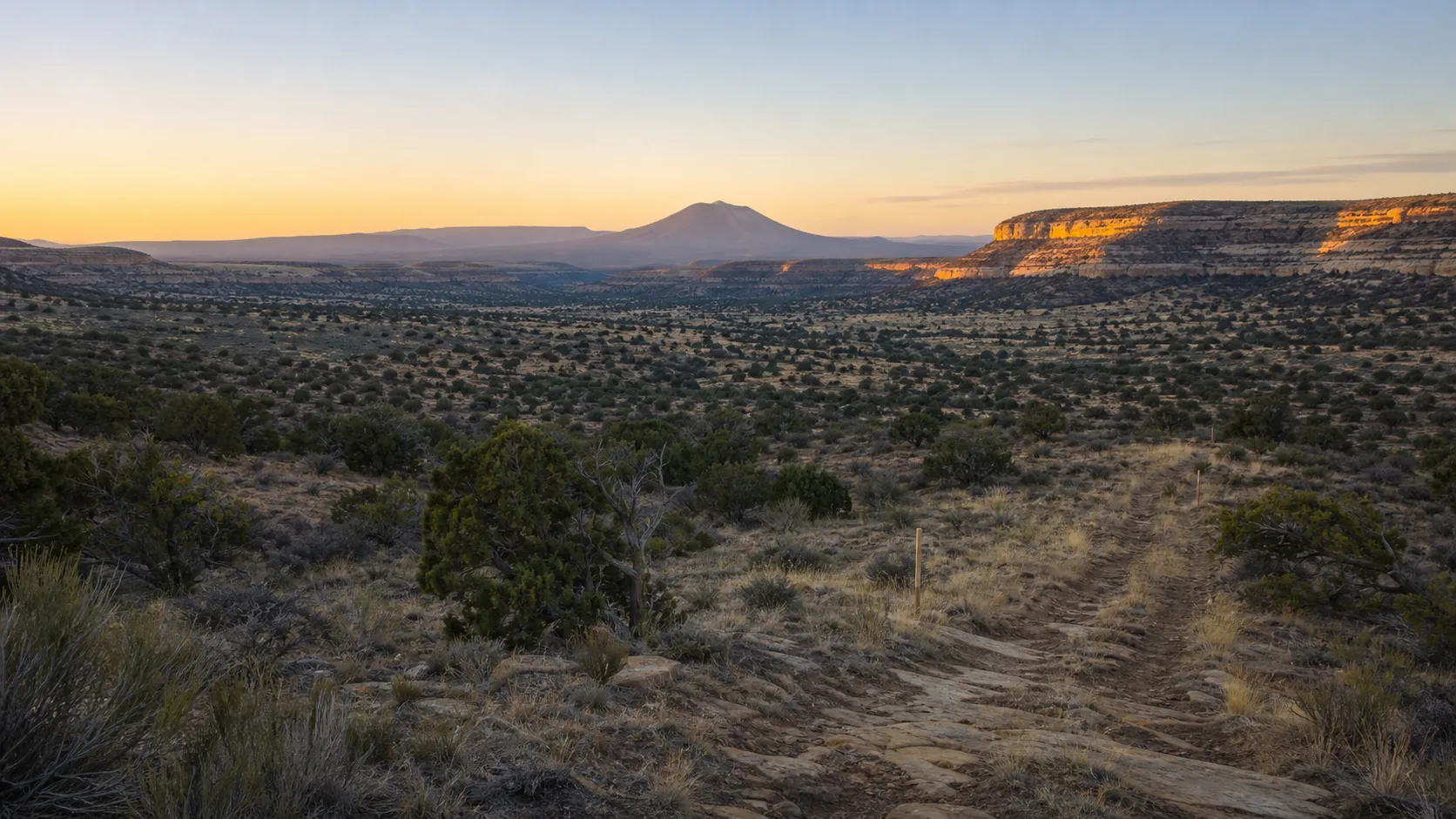
Reading Veyo’s Rural Context With Care
A county planning document offers a useful portrait of Veyo’s landscape and settlement pattern, provided we treat it as a dated source rather than a live community dashboard.
An independent, source-led journal about Veyo’s landscape, cemetery research, preservation ethics, family history, and the discipline of saying what remains unknown.
Read the complete issueEighteen original essays, each written for a distinct question and reviewed against primary or authoritative sources.
A county planning document offers a useful portrait of Veyo’s landscape and settlement pattern, provided we treat it as a dated source rather than a live community dashboard.
A Utah State University Extension comparison of Veyo across decades shows the value—and the limits—of using matched photographs to study landscape change.
Cemetery records can connect a family story to a place, but each record type was created for a different purpose and carries its own gaps.
A quiet field guide to preparing for a cemetery visit, moving carefully through the landscape, and leaving every place as you found it.
Why observation, documentation, permissions, and condition planning often protect historic grave markers better than a well-meant cleaning attempt.
A practical framework for honoring memory online without exposing living people, sensitive records, or more personal data than the story requires.
Browse by reader need, not by a machine-made keyword list.
Read planning documents, repeat photographs, and public maps without turning an old snapshot into a live claim.
Browse place studiesDistinguish lot records, interment registers, indexes, obituaries, certificates, and user-contributed leads.
Browse research guidesObserve before intervention, document without contact, and know when permission and a conservator are essential.
Browse preservationHandle photographs, oral histories, family timelines, and digital memorials with proportion and care.
Browse ethicsOriginal records are distinguished from indexes, interpretations, and user-contributed material.
We do not scrape obituaries, publish living-person details, or mass-produce memorial biographies.
Substantive changes receive a dated note instead of an artificial “freshness” update.
Generated editorial images are presented as illustrative, never as documentary proof of a place or marker.