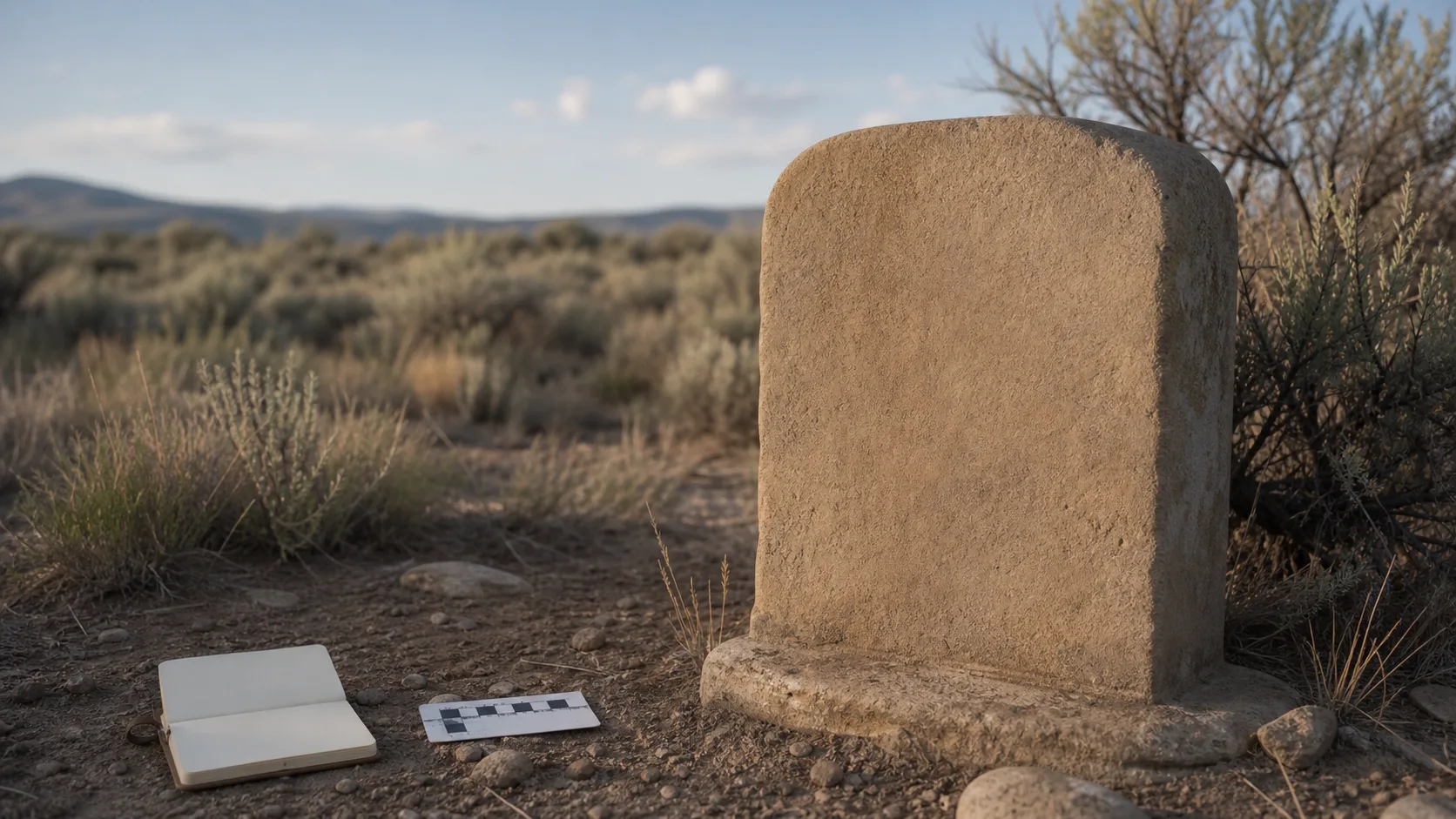
Cleaning is one of the most visible forms of cemetery work, which makes it easy to mistake for preservation itself. Yet a cleaner-looking marker is not necessarily a healthier marker. Every treatment changes a historic surface, and even gentle cleaning can remove a small amount of original material. The National Park Service therefore asks caretakers to begin with purpose, condition, and the least invasive response—not with a product.
For an unaffiliated visitor or beginning volunteer, the safest preservation action is usually documentation followed by a report to the responsible steward.
Separate appearance from condition
Dark streaks, lichen, dust, patina, and uneven color may look neglected, but appearance alone does not establish that treatment is needed. Conversely, a pale, recently washed surface may conceal cracks or granular loss. A condition record should describe what is visible without prescribing a repair.
Begin with an overall photograph, additional views of each face, and detail images of cracks, surface loss, biological growth, movement, or surrounding drainage. Record the date, direction, weather, general location, marker type, and any immediate safety concern. Repeat photographs from the same position over time. Change—not color—is often the most useful signal.
Look beyond the marker. Concentrated roof runoff, soil splash, irrigation, unstable vegetation, mower contact, and foot traffic may create recurring damage. Washing a surface while ignoring the cause can produce a brief visual improvement without protecting the object.
Know when not to proceed
Do not clean a marker that is leaning, loose, cracked through, flaking, spalling, powdery, or “sugaring,” a term used for a loose granular surface. Do not attempt to lift fallen pieces or test stability by pushing. Large monuments, stacked elements, metal attachments, and enclosed structures require specialized assessment.
Ownership and authorization matter, too. A family member, cemetery manager, property owner, tribal authority, public agency, or religious institution may control work at a site. Consent to photograph does not equal permission to clean. Even an apparently abandoned burial ground can have legal protections and community stakeholders.
The National Park Service warns that wire brushes, power tools, aggressive pressure washing, acids, bases, bleach, and salt-bearing cleaners can remove original material or leave damaging residues. It also advises against resurfacing, grinding, re-lettering, and polishing. These actions can permanently change the historic fabric and accelerate later soiling.
Ethics & safety box
Stop if a marker is unstable, if ownership or permission is uncertain, or if the material and condition have not been competently identified. Do not experiment on a “less important” marker. Every marker is an original record and a commemorative object, not a practice surface.
Useful work that does not involve treatment
Preservation planning has many low-contact tasks:
- Create a repeatable photo and condition log.
- Map drainage paths, vegetation pressure, and maintenance hazards.
- Compare current photographs with older documentation.
- Inventory fragments in place without moving them.
- Note where paths or mowing patterns bring people and equipment too close.
- Gather ownership, maintenance, and prior-treatment records.
- Develop a priority list based on safety, rate of change, and significance.
- Seek guidance from a qualified conservator for unstable or complex conditions.
These steps turn isolated concern into evidence. They also help a site manager avoid spending limited resources on cosmetic projects while urgent structural or landscape problems continue.
A decision checklist for stewards
Before any proposed cleaning campaign, document answers to the following:
- Who owns or manages the marker and who has authorized the work?
- What conservation purpose would cleaning serve?
- Has the material and condition been identified by someone competent?
- Is the marker stable enough for treatment?
- What is causing the soiling, and will that cause remain?
- What is the gentlest tested method appropriate to this specific material?
- How will a small test area be evaluated and documented?
- What personal protective equipment and environmental controls are required?
- How will the surface be rinsed and residues prevented?
- Who will record the process and inspect the marker afterward?
If those questions cannot be answered, postpone treatment. Delay is not indifference when it prevents irreversible damage.
Preserve the evidence of age
Historic markers carry tool marks, original finishes, patina, weathering, repairs, and material changes that help researchers understand how they were made and cared for. A campaign focused on making every marker uniform or “like new” can erase that evidence. The U.S. Department of Veterans Affairs makes the same distinction in its guidance for government-furnished markers: the goal of appropriate cleaning is to remove harmful soiling, not to restore a new appearance.
Good preservation accepts limits. It documents what exists, reduces preventable risks, chooses repair over replacement when feasible, and assigns treatment to people with appropriate training. Sometimes the best result is a marker that looks exactly as it did before the project—except that its condition is now understood, monitored, and less likely to worsen unnoticed.
Sources
- National Park Service, “Cleaning Grave Markers — Cemetery Preservation Course”: https://www.nps.gov/articles/000/cemetery-preservation-course-cleaning-grave-markers.htm
- National Park Service, “Preserving Grave Markers in Historic Cemeteries, Preservation Brief 48”: https://www.nps.gov/orgs/1739/upload/preservation-brief-48-grave-markers.pdf
- National Park Service, “Abrasive Cleaning of Grave Markers”: https://www.nps.gov/articles/000/abrasive-cleaning-of-grave-markers-cemetery-conservation.htm
- U.S. Department of Veterans Affairs, “Headstones, Markers, and Medallions”: https://www.cem.va.gov/hmm/